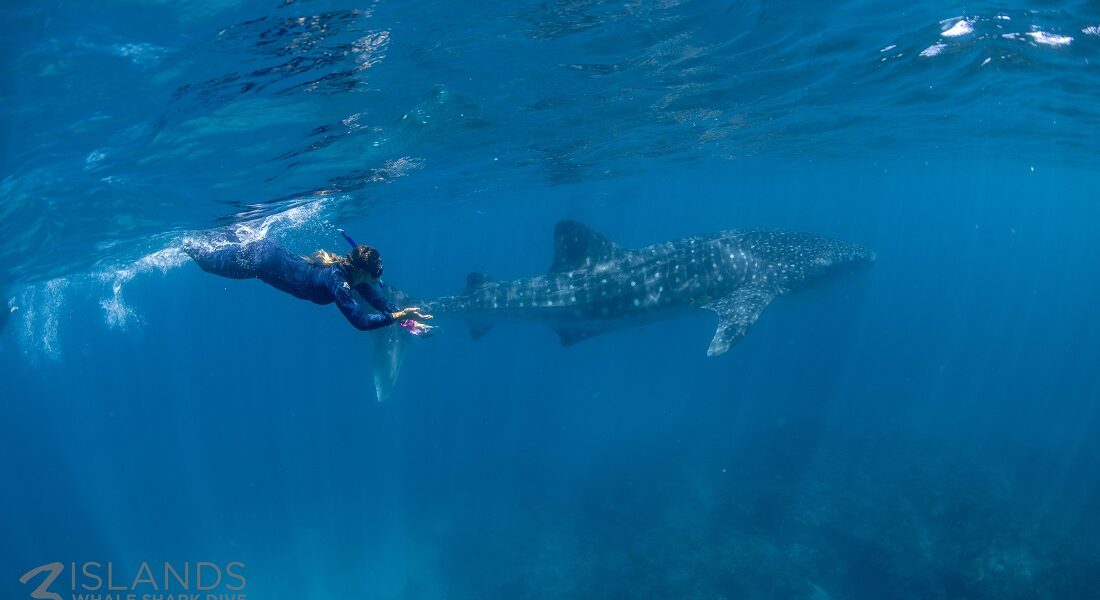
Swim with Whale Sharks in Exmouth: A Complete Guide to Australia’s Greatest Wildlife Encounter

Ask any seasoned traveller to name the single most extraordinary wildlife experience they’ve had in Australia, and most will say the same thing: the day they got to swim with whale sharks at Exmouth. Not the Great Ocean Road. Not a Kakadu sunrise. Not feeding kangaroos in a paddock. The day they slipped into warm Indian Ocean water and found themselves alongside a creature so vast and so calm that the rest of the world simply stopped making noise.
It’s a bold claim until you’ve done it and then it becomes entirely self-evident.
Exmouth, on the tip of Western Australia’s North West Cape, sits at the edge of one of the planet’s great marine ecosystems. The Ningaloo Reef stretches 260 kilometres down the coast, beginning just metres from the shoreline in places, and each year from March through to October it draws the world’s largest fish the whale shark in numbers found almost nowhere else on earth. For anyone seriously considering making the trip, this guide lays out everything worth knowing about how to swim with whale sharks in Exmouth, from the biology of the animals to the logistics of getting there.
Why Exmouth Is the World Capital for Whale Shark Encounters
There are a handful of places worldwide where whale sharks gather with any regularity. But Exmouth and the broader Ningaloo coastline stands apart for a specific reason: predictability.
Whale sharks arrive at Ningaloo in direct response to the reef’s annual coral spawning event, which occurs with remarkable consistency around the full moon in late March. The spawning releases enormous quantities of eggs, larvae, and organic material into the water column, producing rich plankton blooms. Whale sharks, being filter feeders, follow this food source like clockwork. The result is the most reliable, accessible, and well-studied seasonal aggregation of whale sharks anywhere in the world.
The Ningaloo Marine Park is also a UNESCO World Heritage Site one of only a handful of marine areas globally to receive this designation recognised for its extraordinary biodiversity and unique coastal geography. Few reef systems anywhere offer snorkellers such direct, shore-accessible encounters with wildlife of this calibre.
Other whale shark destinations the Philippines, the Maldives, Mexico’s Yucatan coast can offer spectacular encounters, but they lack Ningaloo’s combination of consistency, space, ecosystem health, and proximity to shore. Exmouth is genuinely in a category of its own.
Understanding Whale Sharks: The Gentle Giants of the Ocean
Before you get in the water, it helps to understand a little about what you’re actually dealing with. Whale sharks (Rhincodon typus) are the largest fish species on earth, capable of growing to twelve metres in length and potentially living for over 70 years. They are cartilaginous fish more closely related to sharks and rays than to bony fish but their size is about where the comparison to anything threatening ends.
Whale sharks are filter feeders. Their enormous mouths sometimes exceeding a metre and a half in width function like slow-moving nets, sieving vast quantities of water for plankton, fish eggs, and small crustaceans. Their throats are anatomically incapable of swallowing anything larger than a small fish. They have no interest in humans as prey or as threat.
In the water, they move with a slow, rhythmic side-to-side motion that is almost hypnotic to watch. Their pace is deceptively quick a whale shark gliding at a leisurely speed requires a solid snorkel kick to keep alongside. Their skin is covered in a distinctive pattern of white spots and stripes on a dark grey or blue-black background, each pattern as unique as a fingerprint and used by researchers for individual identification.
Despite decades of concentrated study at Ningaloo and other aggregation sites, much about whale shark behaviour remains genuinely mysterious. Scientists don’t fully understand their wider migration patterns, their mating behaviour, or where females give birth. Encountering one in the open ocean carries the particular thrill of being in the presence of something we still don’t entirely know.
What Happens on a Full-Day Whale Shark Tour
For most visitors, the centrepiece of an Exmouth trip is a full-day guided whale shark tour. Understanding the structure of a well-run tour helps set realistic expectations and realistic expectations make the experience even better.
Before you leave the marina
Tours depart early, typically around seven in the morning. Before the boat heads out, guides conduct thorough safety and wildlife interaction briefings. You’ll learn the rules for approaching whale sharks specifically the requirement to stay at least three metres from the body and four from the tail and you’ll be fitted with snorkelling equipment. Most quality operators include fins, mask, snorkel, and a wetsuit or stinger suit in their pricing.
The spotter plane
Once underway, the search begins. Premium operators use a dedicated spotter plane working in coordination with the vessel. From altitude, whale sharks are visible as large shadows moving below the surface their distinctive spot patterns are identifiable from the air. The plane communicates the shark’s position and heading to the boat, which then moves into position ahead of the animal. This dramatically reduces the time spent searching and maximises in-water encounters.
Getting in the water
When the boat is in position, a small group of swimmers typically eight to ten people plus a guide enters the water and waits for the shark to approach. You’ll often hear the guide before you see the fish: “It’s coming from your left get ready.” And then, emerging from the blue, the shark arrives.
The swim itself can last anywhere from a few minutes to twenty or more, depending on the animal’s behaviour. Whale sharks dive when they’ve had enough company. Some individuals are more tolerant than others; some days produce longer, more relaxed encounters than others. The unpredictability is part of what makes it feel genuinely wild rather than staged.
Between encounters
Full-day tours typically include a morning reef snorkel before the whale shark search begins. Ningaloo’s coral gardens are spectacular in their own right a technicolour ecosystem of reef fish, sea turtles, reef sharks, and hard and soft corals that would be the headline attraction on any other coastline. A buffet lunch is served on board between activities, and the tour continues through the afternoon before returning to the marina.
Safety and Environmental Responsibility
The question most first-timers ask is some version of: is it actually safe? The answer is yes, and the reasoning is straightforward. Whale sharks are not predators. They have never been recorded injuring a swimmer deliberately. The only genuine risk is being struck by the tail of a large, slowly moving animal a risk managed by maintaining the recommended distances and following guide instructions.
What’s equally important is the environmental dimension. Whale sharks at Ningaloo are wild, free-roaming animals visiting a Marine Park with strict interaction protocols. The rules around touching, flash photography, and proximity aren’t bureaucratic formalities they’re conservation measures designed to ensure these animals continue to return to Ningaloo year after year without being harassed into avoiding the coast.
Legitimate, accredited operators adhere to these standards as a matter of both legal compliance and genuine values. Ecotourism Australia certification is one recognised benchmark. WA Tourism Awards recognition is another. When choosing a tour, asking about accreditation and conservation involvement is always worthwhile the best operators don’t just comply with regulations, they actively support whale shark research and ocean health initiatives.
Ningaloo is also home to a long-running whale shark research programme. Individual animals are identified through their spot patterns using photo-ID databases, and tour operators contribute sighting data that feeds into population studies. As a swimmer, you’re not just a tourist you’re a participant in an ongoing scientific record.
For a broader understanding of the remarkable ecosystem you’ll be swimming in including the manta rays, humpback whales, sea turtles, and reef species that share these waters the whale shark and Ningaloo reef experience at Exmouth offers a detailed picture of what makes this coastline so exceptional.
When Is the Best Time to Swim with Whale Sharks in Exmouth?
Whale shark season at Ningaloo runs from early March through to October a window of nearly eight months that gives visitors genuine flexibility.
March to July is the most popular time to visit and sees the highest volume of bookings. Sighting rates are at their peak during these months and the water is warm, clear, and settled. If you’re planning your first trip and want to maximise your time in the water with these animals, this is the window to aim for. April through July in particular fills up quickly, so booking several months in advance is strongly recommended.
August to October is a period that deserves far more attention than it typically gets. Sighting rates during these months drop by only around five per cent compared to the peak season meaning your chances of swimming with a whale shark remain extremely high. Tours continue to run throughout and crowds are noticeably thinner, which often translates to a more personal experience on the water. There’s also an added attraction: humpback whale season runs from August through mid-October, and Ningaloo sees one of the largest humpback populations on the Australian coast. Visitors travelling in this window may find themselves encountering both species within the same day.
Whichever part of the season you choose, Exmouth accommodation books out well ahead of time. Planning three to six months in advance is wise, and more for families or groups requiring multiple rooms.
Practical Tips for Getting the Most Out of Your Swim
A few things experienced snorkellers at Ningaloo consistently recommend:
Practise your snorkelling beforehand. This sounds obvious, but a surprising number of people arrive having not snorkelled in years. If you’re comfortable and efficient in the water, you’ll spend more time looking at the shark and less time managing your equipment.
Don’t panic about keeping up. Guides pace the swim and assist slower swimmers. You don’t need to be a competitive swimmer. You do need a reasonable level of cardiovascular fitness and comfort with your face in the water for extended periods.
Leave the GoPro on your wrist, not in your face. The temptation to film everything is understandable, but the best accounts of whale shark encounters consistently note that those who spent the whole swim looking through a screen left feeling like they missed something. Film a little, then put the camera down and actually look at what’s in front of you.
Stay calm in the water. Splashing, kicking near the shark’s head, or sudden erratic movements will cause the animal to change direction or dive. Smooth, controlled movement keeps the encounter going longer.
Wear reef-safe sunscreen. Standard chemical sunscreens are damaging to coral and marine life. Most operators specify reef-safe product; some provide it. Check before you pack.
Getting There and Planning the Trip
Exmouth sits approximately 1,270 kilometres north of Perth on the tip of the North West Cape peninsula.
Fly: Learmonth Airport operates direct services from Perth, located about 36 kilometres south of Exmouth. Flight time is just under two hours and is the most practical option for visitors from the eastern states or overseas.
Drive: The drive from Perth takes roughly 12 to 14 hours along the North West Coastal Highway a spectacular road trip through some of Western Australia’s most dramatic landscape. Breaking the journey over two to three days allows stops at Geraldton, Kalbarri, and Coral Bay.
How long to stay: A minimum of three nights is recommended to allow for weather variability. Exmouth can experience sea conditions that occasionally cause tours to be rescheduled; having flexibility means you don’t miss out if conditions aren’t ideal on day one.
Accommodation ranges from caravan parks and beachside holiday parks to self-contained apartments and motel-style rooms. The town is small but well-serviced with good restaurants and cafes.
What Else Is Worth Doing in Exmouth
The whale shark encounter is the reason most people come, but Exmouth has enough to fill a week without repetition.
Cape Range National Park occupies the western side of the peninsula, its red limestone gorges a striking contrast to the turquoise water below. Mandu Mandu Gorge is spectacular at sunset. Yardie Creek, at the park’s southern end, is home to a small colony of black-footed rock wallabies visible from the gorge walk.
Turquoise Bay is widely regarded as one of the best snorkel sites in Australia accessible without a boat. A gentle drift snorkel along the reef edge reveals an extraordinary density of fish and coral in water so clear it barely feels real.
Humpback whale season begins in August and extends through mid-October, overlapping with the tail end of whale shark season. Ningaloo sees one of the largest humpback populations on the Australian coast during their northward migration.
Stargazing in the North West Cape is extraordinary. Light pollution at this latitude is essentially non-existent, and clear nights deliver a view of the Milky Way that makes city-dwellers feel slightly ridiculous for ever calling the sky “dark.”
Conclusion
Some experiences earn their reputation. Swimming with whale sharks in Exmouth is one of them. It’s not an experience that relies on marketing or expectation management the animal itself does all the work. Twelve metres of slow-moving spotted fish, utterly unconcerned by your presence, moving through crystal-clear Indian Ocean water with a kind of unhurried authority that makes the entire human world feel rather small and rather loud.
Exmouth is a long way from anywhere. That’s not a drawback. It’s part of why the coastline is in the condition it’s in. The reef is healthy, the wildlife is abundant, and the encounters feel genuinely wild because they are. There’s no crowd pressing in around you, no artificial feeding to keep the animals close. Just open water, spotter plane overhead, and one of the planet’s most remarkable creatures coming your way.