
Relocating to Singapore presents an immediate quality-of-life decision that many expatriates address within their first few weeks: where to train. For internationally mobile professionals accustomed to premium fitness facilities in London, New York, Sydney, or Dubai, finding the right gym is not a minor detail. It is a practical priority that affects daily routine, stress management, and social integration.
The search for the best gym in Singapore among expats follows a distinct set of criteria shaped by previous experience in mature fitness markets and the specific demands of life as a professional in a high-intensity city.
Coaching Quality Is the Non-Negotiable
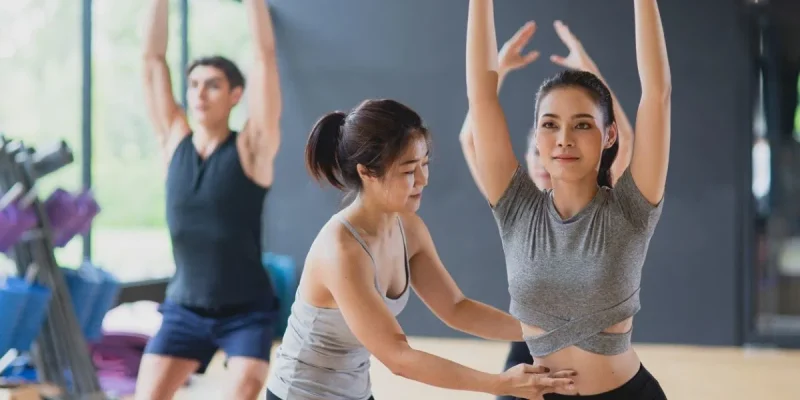
Expats arriving from markets with developed premium fitness cultures have typically trained under genuinely qualified instructors. They know what good coaching looks, sounds, and feels like. Generic motivation does not impress them. Movement-specific cueing, individual attention within group settings, and instructors who can engage with training questions at a technical level do.
This makes coaching quality the first filter for most internationally experienced gym members. A facility with impressive equipment but uninspiring instruction loses the expat market quickly.
English-Language Instruction
This may seem obvious in Singapore’s context, but it is worth noting explicitly. Expats typically want classes and coaching delivered in clear, fluent English. Singapore’s premium gym market generally meets this standard, but it remains a practical consideration when evaluating boutique studios.
Location Relative to Residential and Work Hubs
The expatriate population in Singapore clusters around specific residential areas: Orchard, Holland Village, Buona Vista, Sentosa, and the East Coast, among others, as well as work-dense districts like the CBD and one-north. Gyms that are well-positioned relative to these hubs, or easily accessible by MRT, have a structural advantage in attracting and retaining expat members.
Travel time is a hard constraint for expats managing demanding professional schedules across multiple time zones. A gym that requires a 30-minute journey versus one that is a 10-minute walk from the office will consistently win.
Flexible Membership and Trial Options
Expats often arrive on fixed-term assignments with uncertain end dates. The ability to access a free trial before committing, flexible membership durations, and straightforward membership transfer or cancellation policies are practically important.
Gyms that offer transparent, expat-friendly membership structures build trust early in the relationship. Those with opaque contracts or restrictive cancellation terms create friction that the internationally experienced expat community actively avoids.
Community and Social Integration
Beyond fitness, the gym serves a social function for many expats, particularly those who have relocated without an established local network. A gym community that is internationally diverse, professionally accomplished, and socially open is genuinely valuable during the adjustment period of a relocation.
Premium gyms in Singapore that cultivate this dynamic often see strong word-of-mouth referral within expatriate networks, as member recommendations carry significant weight when people are making decisions in an unfamiliar market.
Recovery and Ancillary Services
Expat professionals managing heavy workloads across multiple time zones place significant stress on their systems. Recovery services, including mobility-focused classes, body composition tracking, and nutrition guidance, are valued as part of a comprehensive wellbeing offering rather than optional extras.
A gym that supports both performance and recovery aligns well with how high-functioning expats tend to think about their health investment.
FAQ
Do Singapore gyms typically offer short-term memberships suitable for expats on fixed-term contracts?
Many premium gyms offer monthly or quarterly membership options alongside annual contracts. It is worth asking directly about flexibility before committing, as policies vary significantly between facilities.
Is the gym culture in Singapore welcoming to new expat members?
Generally, yes, particularly at premium and boutique facilities where smaller class sizes and active community-building create a more personal dynamic. Large-format gyms with less coaching interaction can feel more anonymous initially.
What time slots are typically least crowded in Singapore gyms?
Mid-morning on weekdays, roughly 9am to 11am, and early afternoon between 1pm and 3pm, tend to be quieter than the before-work and after-work peaks. Weekends are unpredictable and vary significantly by facility.
How do Singapore gym standards compare to what expats typically experience in London or New York?
At the premium end, Singapore gyms compare very well in terms of facility quality and coaching standard. The training culture is serious and professional. Some expats note that the boutique and community fitness scene in Singapore is still maturing relative to larger markets, but the gap has narrowed considerably.
TFX Singapore is a gym that resonates strongly with the expatriate market precisely because it meets the coaching, community, and training environment standards that internationally experienced members arrive expecting.