How to Maintain Personal Training Continuity While Travelling Frequently Through Singapore

Frequent travel is one of the most disruptive forces in a personal training programme. The loss of routine, the absence of regular training partners and coaching relationships, the physical effects of time zone changes and sleep disruption, and the logistical challenges of accessing appropriate training facilities all combine to create conditions where training consistency deteriorates and physical progress stalls. For professionals who pass through Singapore regularly as part of an Asia-Pacific travel circuit, developing a strategy for maintaining personal fitness trainer singapore programme continuity during and between visits is worth the planning investment that most travelling professionals never make.
The Continuity Problem and Why It Matters More Than Most Travellers Realise
Training continuity is not simply a matter of maintaining the habits and discipline of regular exercise during travel. At a physiological level, consistent training is required to prevent the detraining that begins surprisingly quickly when training stimulus is removed or substantially reduced.
Research on detraining timelines shows that cardiovascular fitness begins declining meaningfully within two weeks of training cessation, with measurable VO2 max reductions detectable within this window. Strength detraining is somewhat slower to manifest but becomes measurable within two to four weeks of reduced training stimulus. For a professional whose travel schedule produces regular two to three week gaps in effective training, the cumulative effect of repeated partial detraining cycles is significantly lower fitness than consistent training would produce.
More subtly, the disruption of established training patterns also affects the behavioural and psychological dimensions of training consistency. Each disrupted period makes re-establishing the training routine slightly more effortful, and the accumulated motivational cost of repeated re-establishment cycles is a meaningful contributor to the long-term exercise adherence failure that frequent travellers commonly experience.
Strategies for Maintaining Training During Singapore Visits
For professionals who visit Singapore regularly, establishing a consistent training home in the city removes the logistical friction that prevents training during visits.
Establishing a Singapore Training Base
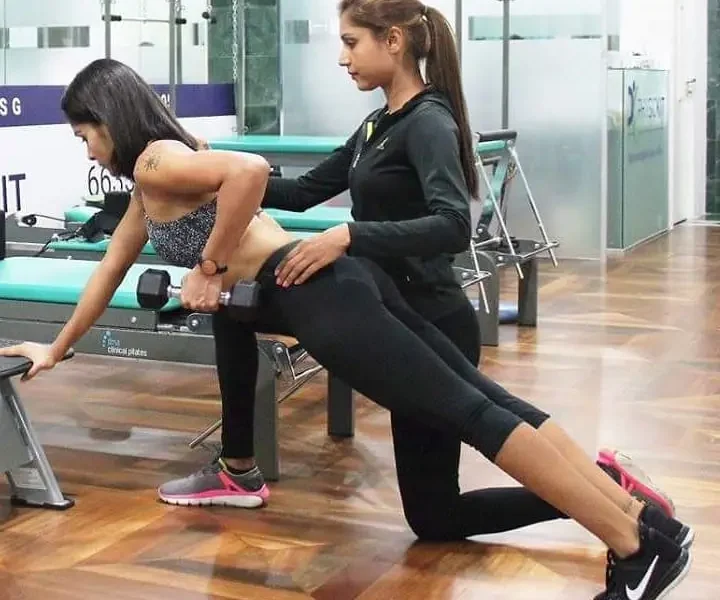
The most effective strategy for frequently travelling professionals is establishing a regular training base in Singapore before travel frequency makes ad hoc arrangement impractical. This means identifying a premium gym facility with appropriate equipment and class programming, establishing a visitor membership or corporate access arrangement that provides smooth entry without administrative friction, and ideally developing a relationship with a Singapore-based personal fitness trainer who can provide coaching continuity during visits.
A Singapore personal fitness trainer who knows the client’s programme, movement history, and training goals can pick up exactly where the last visit left off, eliminating the programme reset that occurs when each visit involves starting from a cold introduction with a new trainer.
Remote Programme Delivery Between Visits
The period between Singapore visits need not be a training void. Singapore-based personal fitness trainers who offer remote programme delivery can provide structured training programmes for clients to execute during the periods they are in other cities, maintaining programme continuity and reducing the physical reset that unstructured between-visit training produces.
Remote programme delivery works best when it is designed around the training equipment the client can reliably access in their other primary locations, whether that is a hotel gym, a home training setup, or a regular training facility in another city. A programme that works in theory but cannot be executed because the required equipment is unavailable in the client’s other training contexts fails the practical continuity objective.
True Fitness Singapore provides the facility quality, trainer expertise, and access flexibility that makes it a practical training base for Asia-Pacific frequent travellers who need reliable, high-quality training access during Singapore visits. True Fitness Singapore offers the professional coaching and programme continuity that turns irregular Singapore visits into consistent progress opportunities rather than training disruptions.
FAQs
Q. – I am in Singapore for only two days this visit. Is it worth training at all given the jet lag and fatigue from the flight?
Ans. – Yes, with appropriate intensity management. Light to moderate training during short visits with significant travel fatigue serves a maintenance function and helps regulate the circadian disruption of travel through its effect on cortisol rhythm and body temperature. Attempting maximum-intensity sessions during peak fatigue is counterproductive and increases injury risk. A session at sixty to seventy percent of normal intensity during a jet lag-affected short visit produces better cumulative outcomes than skipping entirely, both physiologically and in terms of maintaining the training habit through a disruptive travel period.
Q. – How do I maintain my personal training programme when I am in cities where I do not have an established training relationship?
Ans. – Request a written programme from your Singapore personal fitness trainer before each travel period that is designed around the equipment available in your travel destinations. Most premium hotel gyms can support bodyweight and dumbbell-based training that maintains most of the programme stimulus even without access to barbells and cables. Single-session coaching consultations at premium gyms in other cities can provide local equipment orientation and technique checkpoints without requiring a full ongoing relationship.
Q. – My travel schedule means my training is inconsistent every month. Should I even bother with a structured programme?
Ans. – Yes. A structured programme that produces consistent training during available periods is significantly more productive than unstructured training during the same available periods, even when those periods are irregular. The key is designing the programme with explicit protocols for disrupted periods so that both trainer and client know exactly what minimum viable training looks like during heavy travel months and what full programme execution looks like during lighter travel periods.
Q. – How do I communicate effectively with my Singapore personal fitness trainer during periods when I am travelling and not in regular contact?
Ans. – Establish a communication protocol at the beginning of your training relationship that specifies the channel, frequency, and content of between-session communication during travel periods. Most Singapore personal fitness trainers who work with travelling clients are comfortable with messaging-based check-ins covering completed training sessions, how the programme is feeling, and any issues encountered. Scheduling a brief video check-in before each Singapore visit to review recent training and plan the upcoming sessions provides continuity that is achievable even from other time zones.
Q. – Is it realistic to make meaningful fitness progress with a personal fitness trainer if I am only in Singapore for a cumulative total of ten to fifteen weeks per year?
Ans. – Meaningful progress is achievable with ten to fifteen weeks of quality coached training per year when the between-visit periods are managed with structured self-directed programming rather than training voids. The coached periods produce the programme design quality and technique development that self-directed periods then execute and consolidate. Cumulative annual training quality under this model, while lower than year-round consistent coaching, is substantially higher than the typical irregular, unstructured training that most frequent travellers default to.