

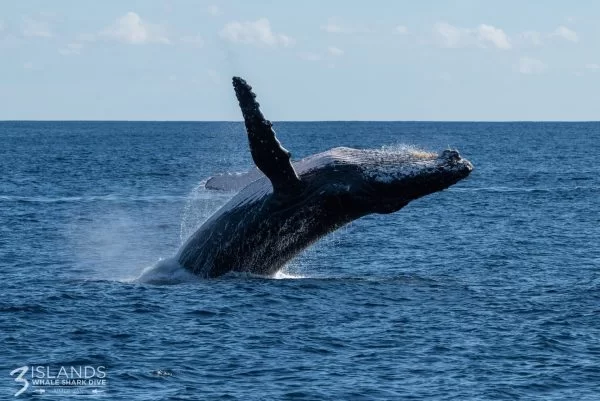
Each winter, tens of thousands of humpback whales move along the edge of the Ningaloo Reef on their annual migration between Antarctic feeding grounds and warmer breeding waters further north. For a few short months, this stretch of Western Australian coastline becomes one of only a handful of places on the planet where you can legally get in the water and swim alongside them. If you’ve been weighing up whether to swim with humpback whales this season, here’s what the experience actually involves, and why so many travellers rank it above almost anything else they’ve done in the ocean.
Unlike a lot of marine wildlife encounters that rely on luck and distance, an in-water humpback swim puts you close enough to feel the animal’s presence before you see its full shape emerge from the blue. Mothers travel with newborn calves, and the two often move together at an unhurried pace, occasionally rolling to observe the swimmers watching them. It’s a genuinely different kind of wildlife encounter, less about ticking a box and more about sitting quietly with something enormous and curious.
Why Exmouth Is the Place to Do It
Western Australia’s North West Cape juts out into open ocean, and the sheltered waters on its western side happen to sit directly in the path of the humpback migration. Whales use the calmer lagoon and reef edge as a resting point, particularly mothers with young calves who need the break before continuing south. That combination of calm water, shallow reef, and consistent whale traffic is rare, and it’s why this small pocket of coastline has become one of the world’s few legally regulated locations for swimming with humpback whales.
Because the whales are migrating rather than resident, timing matters. Early in the season, pods tend to be more active and social, often travelling in groups. As the season progresses into its later weeks, sightings shift towards mother-and-calf pairs moving more slowly and cautiously, which changes the tone of the encounter but not the sense of scale.
Getting the Timing Right
If there’s one thing that catches first-time visitors out, it’s assuming the whale season lines up with school holidays or a specific calendar month. It doesn’t, not exactly. The humpback migration through this part of the coast runs roughly from August through to October, with the window shifting slightly year to year depending on ocean conditions and the timing of the broader migration south.
A few practical things worth knowing before you book:
- Early in the season, whales are often travelling in more active groups, which can mean more surface behaviour like breaching and tail slapping.
- Later in the season, mother-and-calf pairs dominate sightings, and encounters tend to be gentler and more deliberate.
- Weather and swell conditions on any given day affect whether operators can safely put swimmers in the water, so a flexible travel window gives you a better shot at a good day.
- Spotter planes are commonly used to locate pods before boats commit to a site, since scanning from the water alone is far less efficient over open ocean.
Booking mid-season, rather than right at the very start or the very tail end, tends to give the most consistent combination of whale activity and settled conditions, though nature obviously doesn’t work to a schedule.
What Actually Happens on the Water
Most operators structure the day around a full-day charter, departing from Exmouth in the morning and returning mid-to-late afternoon. Vessels are purpose-built for wildlife viewing, with dive platforms and easy water entry designed specifically for snorkel-based encounters rather than diving.
The day usually opens with a briefing on how the in-water interaction works: how groups enter the water, how far to hang back initially, and how to read a whale’s body language for cues that it’s comfortable being approached. This isn’t red tape for its own sake. It exists because humpbacks are powerful animals that can and do choose to disengage if they feel crowded, and a good operator will always let the whale set the terms of the encounter rather than the other way around.
Once a pod is located, usually with help from an aerial spotter, the boat positions itself at a respectful distance and swimmers enter the water in small groups. From there, it’s largely about patience. Sometimes a whale approaches within the first few minutes. Other times, groups spend twenty or thirty minutes in the water waiting, watching shapes move below before a whale decides to come closer. Both outcomes are considered a normal part of a genuinely wild encounter, which is part of what separates it from more curated marine tourism experiences.
What You’ll Actually See and Hear
Visibility on a good day can extend well beyond what most swimmers expect, often enough to see a whale’s full length before it’s directly in front of you. Even at a distance, the low-frequency sound of humpback song is often audible underwater, a strange, resonant hum that carries further than most people anticipate. It’s one of the more unexpectedly moving parts of the experience, hearing the whale before you see it clearly.
Calves are naturally more curious than adults and will sometimes drift closer to a group of swimmers out of what looks a lot like plain interest, while mothers hang back slightly, still clearly attentive. Adult males, particularly in the earlier part of the season, can display more overt surface behaviour, breaching or pectoral slapping, which is spectacular to watch from the boat even on days when in-water conditions aren’t right for a swim.
Combining It With the Rest of the Reef
Because the whale migration overlaps with the tail end of Ningaloo’s warmer season, many trips also include a reef snorkel as part of the day, giving guests a chance to see coral, turtles, and reef fish before or after the whale search. It’s worth checking what else is included when comparing operators, since a day built purely around whale searching can look very different on the water to one that blends in reef time as well.
For travellers keen to see the full range of what this coastline offers across the year, it’s also worth knowing that the same stretch of reef hosts an entirely separate wildlife season built around whale shark tours, which run at a different time of year and focus on a completely different species. Planning a longer stay around the Ningaloo coast means there’s often more than one marine encounter worth building a trip around, depending on when you visit.
What to Bring and What to Expect Physically
This isn’t a passive tour. Swimming with humpback whales Exmouth generally demands a reasonable level of fitness and comfort in open water, since swimmers may need to move quickly to reposition, and conditions can shift through the day. Wetsuits are standard, both for warmth and buoyancy, and most operators supply snorkel gear, though bringing your own mask if you have a preferred fit is never a bad idea.
Sun protection matters more than people expect on a full-day boat trip. A hat, reef-safe sunscreen, and a change of dry clothing for the trip home are worth packing regardless of the season. Seasickness can catch out even confident sailors on a day with any swell, so it’s sensible to bring appropriate medication if you’re at all prone to it, particularly given the distances covered searching for pods.
Choosing a Responsible Operator
Not every operator worldwide follows the same standards when it comes to whale interactions, so it’s worth understanding what responsible practice actually looks like before booking. Look for operators that limit the number of swimmers in the water at any one time, brief guests thoroughly on how to behave around whales, and are upfront about the fact that sightings and interactions can’t be guaranteed. A business that promises certainty with wild animals is one to be sceptical of.
Group size also affects the experience more than people expect. Smaller vessels with capped passenger numbers tend to mean more time in the water per person and a calmer, less crowded interaction, both for guests and for the whales themselves.
Is It Worth It?
For anyone who has spent time around marine wildlife, in-water encounters with a species this large are genuinely rare. Most ocean wildlife tourism keeps a healthy distance by necessity, whether that’s whale watching from a boat or diving with smaller reef species. Humpback swims are one of the few experiences where regulation and geography have combined to make a close, respectful, in-water encounter with one of the ocean’s largest animals actually possible.
It won’t suit everyone. It asks for patience, a degree of physical comfort in open water, and an acceptance that wild animals don’t perform on demand. But for travellers who’ve weighed that up and are still keen, the window between August and October remains one of the most reliable stretches on the Australian coast to have the kind of encounter that’s genuinely hard to describe to anyone who hasn’t done it themselves.